Early Years Practitioners FAQs
Thinking about a career working with young children? With around 347,300 early years staff in England, it’s a growing and vital sector that plays a key role in shaping children’s futures.
This blog answers your most pressing questions about becoming an early years practitioner. Find out what the job involves, how to begin, the skills you’ll need, and why it’s one of the most rewarding careers you can choose.
What is early years practice?
Early years practice refers to the professional care and education of children from birth to five years old. It covers everything from supporting emotional development to teaching basic numeracy in age-appropriate ways.
Practitioners work to ensure children are safe, stimulated, and supported during this formative period of life. The work is guided by the Early Years Foundation Stage (EYFS) framework in the UK. This framework sets the standards for learning and care in all early years settings.
What does the Early Years Foundation Stage (EYFS) framework cover?
The EYFS framework sets the rules for how young children (from birth to age 5) should be cared for and taught in nurseries, preschools, and by childminders in England. This ensures they have the right experiences and care for optimal development. It also ensures they get a good start in life.
It covers:
- What children should learn, like speaking, playing, counting, reading, and making friends.
- How to keep children safe and healthy.
- How to check their progress as they grow.
What are the responsibilities of an early years practitioner?
For early years practitioners, roles and responsibilities are wide-ranging and hands-on. Key responsibilities include:
- Planning and delivering activities to support learning and development.
- Monitoring and recording children’s progress.
- Providing a safe and nurturing environment.
- Supporting children's personal, social, and emotional development.
- Communicating with parents and carers.
- Ensuring compliance with safeguarding and health and safety standards.
- Promoting inclusive practices for children with additional needs.
Every day can bring something different, but the focus is always on the child’s growth and safety.
What’s the difference between an early years practitioner and an early years educator?
The terms are sometimes used interchangeably, but there can be distinctions depending on the context or employer. Generally:
- Early Years Practitioner is a broader term covering anyone working in early years settings, often at Levels 2 or 3 in childcare qualifications.
- Early Years Educator is usually a Level 3 qualified professional focused more on delivering learning through planned educational activities.
Both roles are vital, and in practice, the difference often comes down to qualifications, experience, and setting.
How can you become an early years practitioner?
At The Manchester College, we offer a range of courses to help you start your career in early years education, whether you're just leaving school or returning to study as an adult.
Here are some of the main options:
Level 1 Diploma in Caring for Children: a good starting point if you’re new to childcare. You’ll learn the basics of working with young children and build your confidence. Available for both 16-18-year-olds and adults aged 19+.
Level 2 Certificate in Supporting Teaching and Learning: aimed at adults aged 19+, this course focuses on helping children in school environments, such as working alongside teachers in the classroom.
T Level in Education and Early Years (Early Years Educator): a two-year course for 16-18-year-olds combining classroom learning with industry placements. T-Levels are a direct route into early years work.
T Level in Education and Early Years (Assisting Teaching): another two-year course for 16-18-year-olds, focused on supporting teaching in schools. Includes valuable work experience.
All of our courses are designed to build real skills and prepare you for a rewarding job working with children. If you’re not sure where to start, we’ll help you find the right course based on your age, experience, and goals.
What do you learn on an early years practitioner course?
Early years practitioner courses cover a wide range of essential topics depending on the course and level of study. Main topics include:
- Child development and milestones.
- The EYFS framework and how to implement it.
- Supporting learning through play.
- Communication with children and families.
- Safeguarding and child protection.
- Equality, diversity, and inclusion.
- Health, safety, and hygiene in childcare settings.
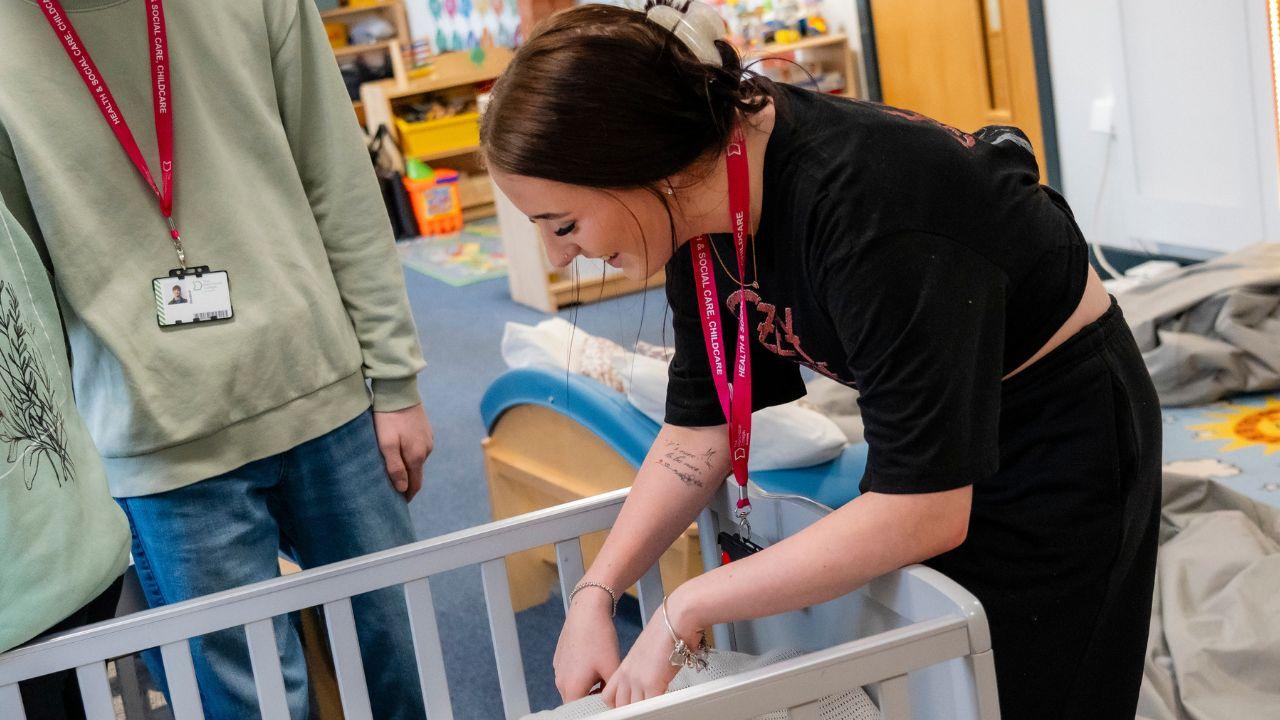
Here at TMC, our early years practitioner course mixes classroom learning with practical experience. This helps students build the skills and confidence needed for the role.
What careers can an early years practitioner course lead to?
An early years qualification opens up a range of opportunities, such as:
- Nursery practitioner.
- Preschool assistant or supervisor.
- Reception class teaching assistant.
- Childminder.
- Special educational needs (SEN) support worker.
- Playworker.
With further study and experience, you could also move into:
- Early years teaching (with QTS).
- Nursery management.
- Family support work.
- Early years consultancy or inspection.
It’s a flexible career with room to grow depending on your interests and goals.
What skills or personal qualities are important for an early years practitioner?
Success in this role depends as much on personal attributes as formal training. Key qualities include:
- Patience and empathy.
- Strong communication skills.
- Creativity and imagination.
- Observational skills.
- Teamwork and collaboration.
- A genuine love of working with children.
- Resilience and emotional strength.
Working in early years can be challenging, but it’s also deeply rewarding for those who enjoy helping children thrive.
What are the challenges early years practitioners face today?
Working with young children is incredibly rewarding, but it does come with its own set of challenges. These aren't drawbacks, they're part of the responsibility that comes with shaping young lives.
Every child is different: children develop at their own pace, so practitioners need to adapt their approach to meet a wide range of needs and personalities.
Big emotions: young children are still learning how to express themselves. Helping them manage frustration, separation anxiety, or outbursts takes patience and care.
Short attention spans: keeping children engaged means being creative, flexible, and ready to change plans if something isn’t working.
Supporting children with additional needs: some children may need extra help with communication, mobility, or behaviour. This requires practitioners to be observant, compassionate, and well-prepared.
Building trust with families: working closely with parents and carers is a vital part of the job, and it takes time and communication skills to build strong, supportive relationships.
These challenges are all part of what makes early years practice meaningful. Helping a child learn to share, speak confidently, or tie their shoes is one of the most satisfying parts of the job.
What is the average early years practitioner job description?
Most job descriptions for early years practitioners include duties such as:
- Supporting the day-to-day running of a nursery or preschool.
- Planning and delivering engaging activities.
- Maintaining accurate records of children’s development.
- Assisting with meals, hygiene, and rest times.
- Liaising with parents and external professionals.
- Upholding safeguarding and child protection standards.
What's the average salary for an early years practitioner?
The average salary for an early years practitioner is around £24,000, but there’s plenty of room to grow. With experience and additional responsibilities, you can progress into more senior roles and increase your earning potential.
Study early years practice at TMC
Start a career that truly makes a difference. Early years practice is perfect for caring, patient people who love helping children grow and thrive. It’s a rewarding path with real impact. It’s ideal for those who want to shape young lives from the very beginning.
At The Manchester College, you’ll get hands-on experience, expert support, and the skills employers are looking for. Explore our early years practice courses and enrol today.